Tuesday, September 22, 2009

Live Pythons! The Beatles of comedy are back


September 22, 2009 (New York) – October looks set to be all Monty Python all the time. In celebration of the 40th anniversary of the premiere of the television show Monty Python’s Flying Circus – or the “Ruby Jubilee”, as Eric Idle has dubbed it – the surviving Python’s have a feast of events for diehard fans.

A run of 10 shows of Python skits performed by current comedy notables like Hank Azaria and Jane Leeves, dubbed “An Evening Without Monty Python”, will begin in Los Angeles this week before heading East for five shows in New York. Then comes the premiere of the 6 hour documentary about the group “Monty Python: Almost the Truth (Lawyer’s Cut)” at New York’s Zeigfield Theater on October 15th – to be attended by all the Pythons (including Graham Chapman according to the press release, even though he died in 1989), as well as co-7th-Python’s Neil Innes and Carol Cleveland – and where The British Academy of Film and
Television Arts (BAFTA) will present the Pythons with a special award honoring their outstanding contribution to film and television before a weeklong showing of the documentary and several Python movies on IFC. And capping it all off will be a performance of “Not The Messiah: You Naughty Boy”, Eric Idle and John du Pres’ follow up to “Spamalot”, based on the much lauded Python film “Life of Brian” and including cameos by all the surviving Pythons save John Cleese, who Idle says is only being kept away by a one man show tour “in order to pay for his divorce.”

All the while the aforementioned hit musical Spamalot – based on the film “Monty Python’s Holy Grail” – is still on tour somewhere in California.

Got all that? Good.

But first comes a new book. Today, actually.

“Monty Python Live!” is an oral history by the Python’s which tells the story of the group’s tours of the UK and Canada, its legendary run on Broadway and infamous run of shows at the Hollywood Bowl.

"Monty Python Live!” is a window into a little-discussed aspect of the Pythons’ career, making it fresh for even the most ardent fan. Also included are rare photographs, copies of concert programs (not the cleanest copies, I must say) and Michael Palin’s hilarious diary of the group’s Broadway run which originally ran in Esquire magazine in 1976.

Beyond that are the usual scripts included in most Python books. Fans will know these skits by heart, and reading them without any frame of reference would likely fall flat with the more casual fan, but they are nice to have nonetheless.

But it’s the reminicences from the live shows that make up the first half of the book that really are the centerpiece of the book and the reason to pick up “Monty Python Live!” You get stories about visiting the Playboy mansion, Graham Chapman’s mom throwing the Rolling Stones out of a party when it turned 10 o’clock (and them obliging!), bombing on the Tonight Show, how to negotiate a two-buttock massage in New York City, George Harrison sick with Hepatitis but refusing to miss his chance to sing the “Lunberjack Song” before an unknowing Broadway crowd and Harry Nilsson falling off the stage drunk during the same bit just a few nights later.

So for your $24.99, you get a fancy, over-sized paperback with hilarious anecdotes typical of the Pythons. Pretty good value, in my book.

###

Friday, May 29, 2009

Golden Years -- Allan Tannenbaum’s “New York in the 70’s” a must see for anyone who remembers that decade fondly

Golden Years


Allan Tannenbaum’s “New York in the 70’s” a must see for anyone who remembers that decade fondly


By Jeff Slate


New York, May 28, 2009 – “Look how happy they were. They were so in love,” said John Lennon’s one-time personal assistant Fred Seaman as he entered the Not Fade Away Gallery last night.


The gallery is currently hosting an exhibition of photographer Allan Tannenbaum’s work, entitled “New York in the 70’s”. The show, a mix of Tannenbaum’s work for the legendary but no-defunct Soho News and from his personal collection, runs through June 25th.


Seaman was looking at the large, prominently displayed headshot of John Lennon and Yoko Ono taken by photographer Allan Tannenbaum that is one of the most iconic shots of the former Beatle from the last year of his life. Lennon and Ono are both smiling and looking directly at the camera.


“I was there for some of Allan’s shoots with John and Yoko,” Seaman continued. “It was an amazing time.”


“It was only two days that I shot with them,” Tannenbaum later told me. “”It was incredibly exciting to be allowed into their inner sanctum.”


The show includes only a few shots of Lennon, but about 50 more that recall a golden time in New York City. Shots of David Bowie, Bob Marley, the Rolling Stones and the Clash onstage are mixed in with arresting shots of the Clash’s Joe Strummer hanging out of a taxi cab window, Stevie Wonder serenading the patrons of a Harlem restaurant and Frank Zappa licking a belly dancer at his 1974 birthday party. There’re also shots of Studio 54, Sid Vicious’ arrest, Andy Warhol and even O.J. Simpson dressed as a Conehead on the set of Saturday Night Live as well as some beautiful, artistic shots of New York City as it was, now over 30 years ago.


“It was great to be given the freedom to include anything I wanted,” Tannenbaum said as a packed house vied to see his work. “That’s an incredible honor. There were some shots that I knew so well I just knew I had to use them. But I went back and looked through everything I could find and every time I opened a file I would say to myself ‘Oh man, I’ve gotta use this!’”


Asked to pick out his three favorite shots, Tannenbaum didn’t hesitate. “John and Yoko in front of the Dakota (in November 1980), the Anti-nuclear rally in Battery Park (from 1979) and that shot of Patti Smith,” Tannenbaum said, gesturing to a shot of the proto-punk, rocking out in 1974.


The shots each tell a story, both about a New York that no longer exists and the photographer himself. Tannenbaum’s shots – most taken while simply on assignment – show an empathy and immediacy often missing in this digital age.


Not Fade Away Gallery (www.nfagallery.com) is located at 12 East 20th Street, 2nd Floor. Allan Tannenbaum has a new, companion book out, also called “New York in the 70’s”.


###

Monday, May 11, 2009

John Lennon Returns To New York


Rock n Roll Hall of Fame Annex exhibit opens May 12, 2009

Yoko Ono and Jim Henke meet the press

By Jeff Slate

New York, May 11, 2009 – Yoko Ono choked up visibly when recalling her late husband John Lennon and their time in New York City at the opening of the exhibit on his time here that opens tomorrow at the Rock n Roll Hall of Fame Annex in SoHo.

“John loved New York City,” Ono said. “Because to him, this was the center of the universe.”
The exhibit, which opens to the public tomorrow after a gala tonight that Ono, Rolling Stone founder Jann Wenner and actor Tom Hanks are all expected to attend, celebrates the period from 1971 when Lennon and Ono moved into a small Bank Street apartment and joined the Greenwich Village political scene until 1980 when Lennon was shot dead in front of the couple’s Dakota apartment building. It was a time that photographer and Lennon friend Bob Gruen recalled fondly.

“I’m glad this exhibit exists, because it will show just how productive John was during his solo years here in New York. When people think of John in the 70’s they usually think of some drunken time in Los Angeles. But John made some great records in the 70’s; most of them in New York. “Sometime In New York City” is a great record. It’s overlooked.”

Gruen beamed while talking about Lennon while he toured the exhibit and recalled the times they spent in New York together. When I asked him what his quintessential Lennon/New York City moment was, he didn’t hesitate: “The trip to the Statue of Liberty,” he said, referring to the iconic photograph that greets visitors as they enter the exhibit and its all-white carpeted floor. “John and I took the ferry, just like any other tourists. It was really cool. There were about 40 German kids – students – and they started screaming like it was Beatlemania when they recognized John. But he calmed them down and signed autographs for them all and then we went on our way. It was a great day.”

That photo, and hundreds more of Lennon’s time in New York (many by Gruen, in fact), adorn the walls, while Lennon’s piano – complete with multiple cigarette burns – many of his original lyric sheets and production notes and his clothes, including his infamous “New York City” t-shirt and green army surplus shirt, sit behind glass while visitors listen through headsets to a guided tour of the exhibit featuring Lennon’s voice and music and the audio for 4 large video projections.

But the most arresting part of the exhibit comes near the end. A large poster of the cover of Ono’s “Season Of Glass” album cover depicting the blood-stained glasses Lennon was wearing when he was killed (with a smaller photo of her actually snapping that image) and the headline “932,000 people have been killed with handguns since John Lennon was killed”, followed by the bag Ono received from the morgue with Lennon’s personal effects not long after his death. On a card next to the bag Ono writes “John was the ‘King of the World’ but he came back to me in a brown paper bag.” An open petition that visitors touring the exhibit can sign follows the part of the exhibit featuring the poster and the bag of effects. It will be presented to President Obama in the hope that he will affect more stringent gun laws.

“That’s the part of the exhibit that really struck me,” said Mark Lapidos, the founder of the Fest For Beatles Fans (formerly BeatlesFest). “It’s amazing and saddening. John is gone. I hope it makes people think.”

But at the very end, Ono has placed one of her trademark mischievous art installation pieces. It’s a simple white phone that she says she will call “when I think of it.” She will talk to whomever picks up. After all the joy and sadness of the exhibit, you have to think Lennon would have loved that part the best.

The exhibit may be small, but it packs a punch and humanizes Lennon and what we lost nearly 29 years ago with his death.

###

Friday, March 20, 2009

“Rutlemania!” comes to New York City. [From the archives.]

In honor of Neil Innes' appearance at The Fest For Beatles Fans next weekend, here's something about The Rutles:

By Jeff Slate, for Pythonline.com
March 27, 2008


“We are, quite literally, in our fourth week of production,” a a shocked and stunned Eric Idle told me after the opening night of
“Rultemania!” last night here at New York City’s Gramercy Blender Theater.


Shocked? Stunned? You bet. “Rutlemania!” is a loving tribute to The Rutles, Idle’s 1978 concoction that was in fact a tribute to The Beatles, and is a wild, rollicking success.

As the legend goes, after seeing a rough cut of what eventually became The Beatles’ “Anthology” documentary courtesy of his pal George Harrison, Idle teamed up with “Seventh Python” Neil Innes to send up the story of the Fabs. So true to the real story was the telling that the NBC TV show “All You Need Is Cash” became the template for all documentaries about The Beatles since, even being referred to in the band’s “Anthology” itself.


So what is “Rutlemania!”? The show interweves live performances by the pheonomenal “Fab Four” – a Beatles tribute band from Las Vegas – with footage from the original Rules television show and the recent sequal “Can’t Buy Me Lunch.”

We see the Fab Four, in costume true to the original show, recreate the Rutles story in synch with the original footage, with breaks for a bit of acting and exposition and film of celebrities like Steve Martin, Garry Shandling, Paul Simon, Mick Jagger and even George Harrison himself (who got the night’s loudest cheer) reminiscing about the impact of The Rutles or just playing along with the gag. Idle’s narration, in the guise of an overwrought investigative journalist, is the thread that holds it all together.

All that and two energetic Go-Go dancers! What more can be said? Rutles, Python and even Beatles fans should count themselves lucky that there’s something new and fun to spend their money on.

“Just about a month ago I got a call from Eric saying he had a production he wanted to stage and asking if I was available,” Chris Williams, of the shows production team, told me after the show. “Three weeks ago we had a bare stage for the very first rehearsals.” So, no wonder Eric Idle seemed shocked and stunned. They actually pulled it off.

This is certainly no big-budget “Spamalot”-type Broadway production. But it is fun, and light, and moves along at a brisk pace for all but a few moments at the beginning of the second act when the Fab Four dips in to the songs from the 1990’s Rutles “reunion” album.

It’s fun to see the story come to life, and the Fab Four pull off as a four piece what most Beatles cover bands can’t do with backing tapes. The versions of Rutles songs they play are precise and loose at the same time, and the acting they do is lighthearted and true to the original television show (and the actual Beatles themselves.)

“Not bad for a tribute to a band that never existed, eh?” Idle said as we parted, with a gleam in his eye.

###

Friday, March 6, 2009

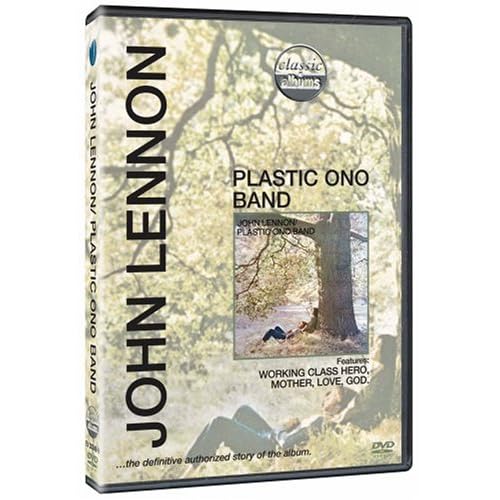
Classic Albums: John Lennon/Plastic Ono Band


John Lennon/Plastic Ono Band
Classic Albums


DVD
Eagle Rock Entertainment


By Jeff Slate

John Lennon may have been at his emotional and personal bottom when he set about to record “John Lennon/Plastic Ono Band”, but he was certainly at one of the most creative points in his career. So, like many fans of The Beatles, and particularly John Lennon, the announcement in March that the long-running Classic Albums series was going to tackle “John Lennon/Plastic Ono Band” was a welcome one. This DVD does an excellent job of taking us back to those sessions with a “fly on the wall” approach and is a welcome edition to the scant list of official John Lennon DVDs available.

The Classic Albums series has been around for about 10 years. (You may recall that when it was first imported from the UK by VH-1 that Ringo was the host of the series.) The shows are now most readily available on DVD and have covered some of the seminal albums of the past 50 years, including Elvis Presley’s debut, Bob Marley's “Catch a Fire”, Fleetwood Mac's “Rumours”, Elton John’s “Goodbye Yellow Brick Road”, Cream’s “Disraeli Gears” and Pink Floyd’s “Dark Side of the Moon.”

The first DVDs in the new series just announced include The Doors’ debut album and “Plastic Ono Band”.

Recorded in the fall of 1970 and released in December of that year, “Plastic Ono Band” was a stark and often bleak picture of where John Lennon was at the time. Lennon and Yoko Ono were fresh out of “primal scream” therapy with Dr. Arthur Janov, and his recollections of Lennon in his interview segments are illuminating.

But what this series does best is to put you “in the studio” via interviews with the participants in the making of the album. This DVD is no exception.

There are fresh and candid interviews with Yoko, Ringo Starr, Klaus Voorman and the technical team from Abbey Road who assisted in the making of the album. Not surprisingly Phil Specter is not interviewed, but what is very interesting is how little is made of his role in the production of the album even though he is credited as such along with John and Yoko. Much is made, however, of the simple and understated accompaniment supplied by Ringo and Klaus Voorman, and though we don’t get any isolations of Ringo’s drumming he does go into great detail about how he “supports” the songwriter and the song and his style generally. Seeing Ringo talk about his musicianship was a welcome change from the autopilot demeanor he has adopted in his recent promotional juggernauts.

Klaus Voorman does play along with some of the tracks on bass (and even piano, to illustrate Lennon’s simple but effective style) and it will make both players and fans appreciate his role in this album and the other solo Beatles records he played on all the more.

As there doesn’t seem to be any video footage of the sessions the producers have used
little-seen (but previously circulating) clips of Lennon attending the Alexandra Palace psychedelic event in London in 1967 and sequences from 1969’s BBC “24 Hour” documentary. There are also clips of John and Yoko’s appearance on “Parkinson” from 1971 (which I don’t believe is circulating even among collectors). There is also some footage that appears to be from the same batch as the “Imagine” films (from 1972 and 1988) as well as the “Gimme Some Truth” DVD but includes alternate footage.

Jann Wenner, who conducted the infamous December 1970 interviews with Lennon for “Rolling Stone”, and rock critic Richard Williams are interviewed, and Beatle historian Mark Lewisohn adds his knowledge and insight in a forthright and concise manner.

Elliot Mintz, who was not involved with the album at all, is also interviewed and his segments seem out of place.

Yoko comes across very well. She is candid and focuses on the musical content being discussed and her role in that. She seems less guarded or as though she is protecting Lennon’s legacy than she usually does and her recollections are charming and key to placing the viewer as much in the mind of John Lennon during the making of the album as possible.

Like other shows in this series the multitrack tapes are played back and portions are isolated to better show the viewer what the creative team was able to accomplish. This is as fascinating as ever, and it’s stunning how much sound was packed in to 8 tracks by a three-piece band. Even the engineers Phil McDonald and John Leckie seem to marvel at this and these segments are what make this an essential DVD for any Lennon fan.

For collectors it’s worth noting that the DVD includes shots of various EMI Tape boxes, indicating the recording dates of the songs on the album. We now know not only that “Remember” was recorded on John’s 30th birthday (October 9, 1970), but that “Working Class Hero” was recorded on September 26th, “God” and “Well Well Well” on September 27th, “Hold On” on the 30th, and that takes of “Mother” were recorded on September 26th, October 17th and 24th.

In addition to the hour-long documentary, there is just over 30 minutes bonus footage, including some more fascinating isolations and great additional footage regarding “Yoko Ono/Plastic Ono Band”. There are also clips from Lennon's 1972 concert at Madison Square Garden (“Well Well Well” and “Mother”) as well as the “signs” version of “Instant Karma!” from “Top of the Pops”.

In all, this is a great DVD and it makes you hope that Classic Albums will tackle some of the other Beatles solo albums in this same thoughtful manner. While I’m sure we all would have differing wish lists in that regard I think one thing most Lennon fans could agree on is that a DVD with a reassessment of “Double Fantasy” (and “Milk and Honey”), including footage from the sessions, would be a welcome addition indeed.

###